Home
Weather Delhi
WeatherRadar
RainRadar
TemperatureRadar
WindRadar
LightningRadar
Weather News
Editor's Pick
Discover the app
Weather widget
Contact us
Apps
Home / Editor's Pick /

Know your rainbow: Do you know all the different types?

09:25 PM
2 October 2022

Rains & Rainbows
Do You Know All the Different Types?

Dramatic double rainbow spotted by a Weather & Radar userDramatic double rainbow spotted by a Weather & Radar user

If you're tired of the rain, then let's take a look at the bright side. Or, in this case, on the colorful side. Because rain can often lead to rainbows!

A rainbow occurs when the sun shines on a curtain of rain in the air. The sunlight is split and reflected by the raindrops. We see the different colors in a rainbow because the colors in the sun's rays all have different wavelengths and are refracted differently.

The sun's rays contain all the colors at once. But when the sun's rays hit a round raindrop, the drop behaves like a prism, both deflecting and reflecting the light, splitting it into several colors.

The sun's position on the horizon determines the rainbow's appearance and shape. The sun must be at an angle of less than 42 degrees above the horizon, and the lower it is, the more curved the rainbow will be.

Double rainbows occur when there are two reflections on the back of a single raindrop, but at different angles.

Let's take a look at the rainbow's ghostly sister: the fogbow. The white arc contrasts beautifully with the light blue sky.

Fogbows are also called white rainbows and occur in much the same way as ordinary rainbows, with sunlight refracting through water droplets in the sky. The only difference is the size of the water droplets.

Settings for embedded content

Privacy policy

In rainbows, the water droplets are larger, so we can see more colors refracting through the droplets. In a fogbow, light is refracted through much smaller droplets, so only the white color appears.

Sometimes, however, a red band can be seen at the outer edge of the misty arc and a blue band at the inner edge of the arc.

But if there is gold at the end of the rainbow, what might be hiding at the end of a fogbow?

We want to see your cool weather and nature experiences! You can send us photos and videos via the uploader here in the news section, or with the link here.

Weather & Radar editorial desk
More on the topic
Saturday, 28 March 2026

Global onsequences

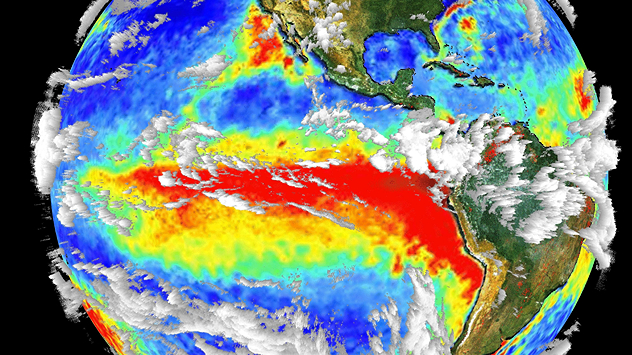
El Niño is back
Split image with a picture of a supermoon on the left, weather radar of India on the right.
Friday, 2 January 2026

The Wolf Supermoon

First Supermoon of 2026 Rises
fog india
Saturday, 7 February 2026

Indian Weather Explained

Why Does It Get Foggy in Winters?
All weather news
This might also interest you
Wednesday, 1 April 2026

Northeast Weather

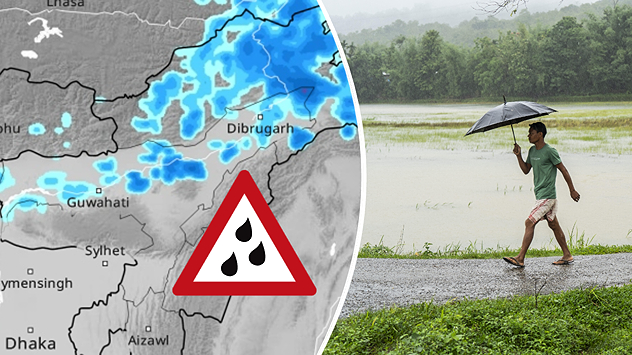
Early Pre-Monsoon Storms Continue in Assam
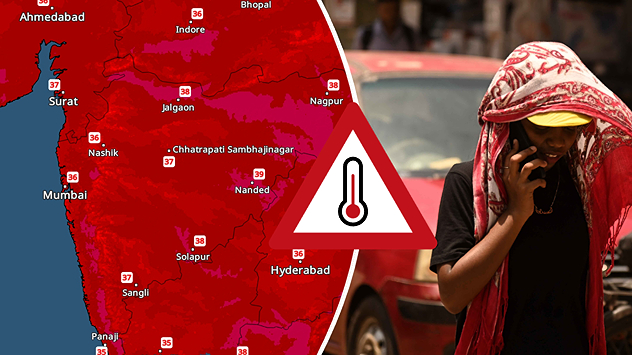
Heat on the rise in Vidarbha, Maharashtra
Tuesday, 31 March 2026

Maharashtra Weather

Vidarbha Heat Peaks Above 41°C
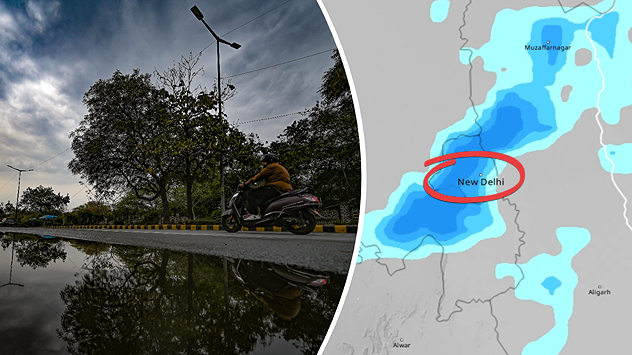
Rain in Delhi in the last week of March
Monday, 30 March 2026

Delhi Weather

Rain and Thunderstorms Likely over NCR
All articles
Weather & Radar

Weather & Radar is also available on

Google Play StoreApp Store

Company

Contact us Privacy policy Legal info Accessibility statement

Services

Uploader

Socials

instagramfacebooktwitterlinkList